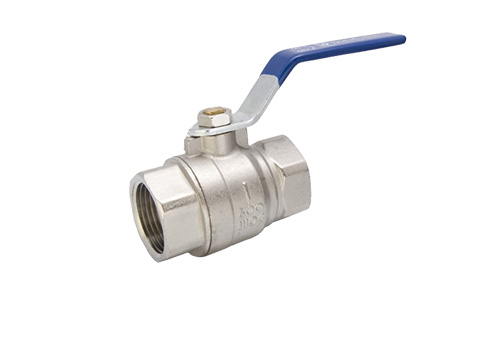
Overview
A ball valve uses a hollow, perforated, and pivoting ball to control flow through a piping system. As a quarter-turn valve, it provides quick shut-off with just a 90-degree rotation. Our range covers floating ball valves, trunnion ball valves, full port, reduced port, v-port, multi-port, and specialized designs for various applications. Materials include stainless steel, cast iron, PVC, and brass with pressure ratings from 150 PSI to 10,000 PSI.
Features
- Quarter-turn operation for quick open/close
- Leak-proof tight sealing in closed position
- Low maintenance with simple structure
- Full port design for minimal flow resistance
- Multiple types: Floating, Trunnion, Full Port, Reduced Port, V-Port, Multi-Port
- Cryogenic and high-temperature options available
Specifications
| Sizes | ¼ inch to 48 inches |
| Pressure Ratings | 150 PSI to 10,000 PSI |
| Materials | Stainless Steel, Cast Iron, PVC, Brass |
| Temperature Range | Up to 500°C |
| Types | Floating, Trunnion, Full Port, Reduced Port, V-Port, Multi-Port, Cryogenic |
| Standards | ASME B16.34, API 6D, ISO 17292 |
Applications
Oil & Gas
Upstream extraction and downstream processing flow control
Chemical Manufacturing
Safe chemical delivery and isolation in processing lines
Water & Wastewater
Water flow regulation in treatment plants and distribution
Pharmaceutical
Sterile flow control in pharmaceutical manufacturing
Food & Beverage
Sanitary flow control in food processing
FAQ
A ball valve is a quarter-turn shut-off valve that controls the flow of liquids or gases through a piping system using a hollow, perforated, and pivoting ball. The ball has a bore or port through its center, and when the valve handle is turned 90 degrees, the ball rotates so the bore aligns with the pipe axis allowing flow, or rotates perpendicular to block flow entirely. This simple mechanism provides reliable, bubble-tight shut-off in both directions with minimal operating torque. Ball valves are available in floating ball designs where the ball is pressed against the downstream seat by line pressure, suitable for low-to-medium pressure applications up to 1,000 PSI, and trunnion ball designs where the ball is mechanically anchored at top and bottom, capable of handling high pressures up to 10,000 PSI and large diameters up to 48 inches.
Ball valves are manufactured from a variety of materials to suit different service conditions. Stainless steel grades including CF8M (316 stainless) and CF8 (304 stainless) are the most common for high-pressure applications up to 10,000 PSI and high-temperature services up to 500 degrees Celsius, offering excellent corrosion resistance for chemical, pharmaceutical, and food processing environments. Brass ball valves are economical choices for general-purpose water, air, and gas applications at moderate pressures up to 600 PSI in residential and commercial plumbing. Cast iron and ductile iron ball valves are used in large-diameter water and wastewater applications where cost effectiveness is paramount. PVC and CPVC ball valves are ideal for low-pressure corrosive chemical services, saltwater, and ultrapure water systems where metal contamination must be avoided.
Ball valves offer several key advantages that make them one of the most widely used valve types across industries. Their quarter-turn operation provides quick, positive shut-off with just a 90-degree handle rotation, much faster than multi-turn gate or globe valves. The simple design with few moving parts results in low maintenance requirements and long service life, often exceeding 100,000 cycles without leakage. Ball valves provide reliable bubble-tight sealing in both directions when closed, preventing any flow bypass even under differential pressure. Full port ball valves have a bore equal to the pipe inner diameter, creating virtually no pressure drop when fully open. They are versatile enough for handling clean liquids, gases, slurries, and viscous fluids across pressures from vacuum to 10,000 PSI and temperatures from cryogenic to 500 degrees Celsius.